

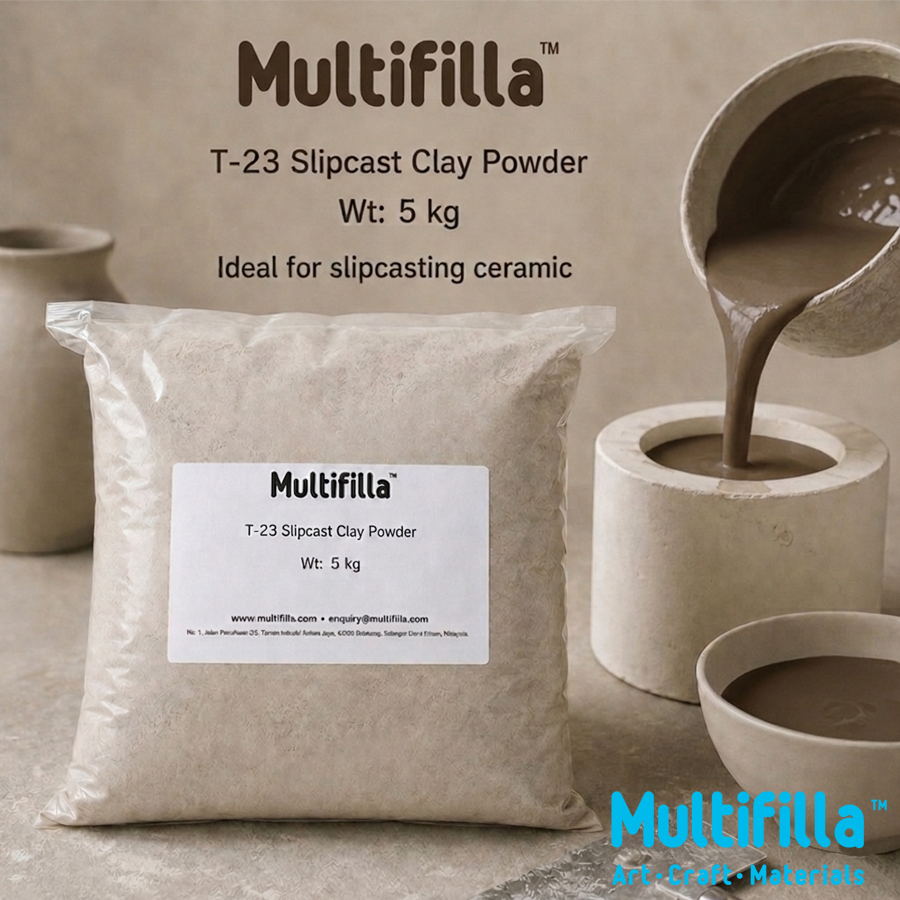
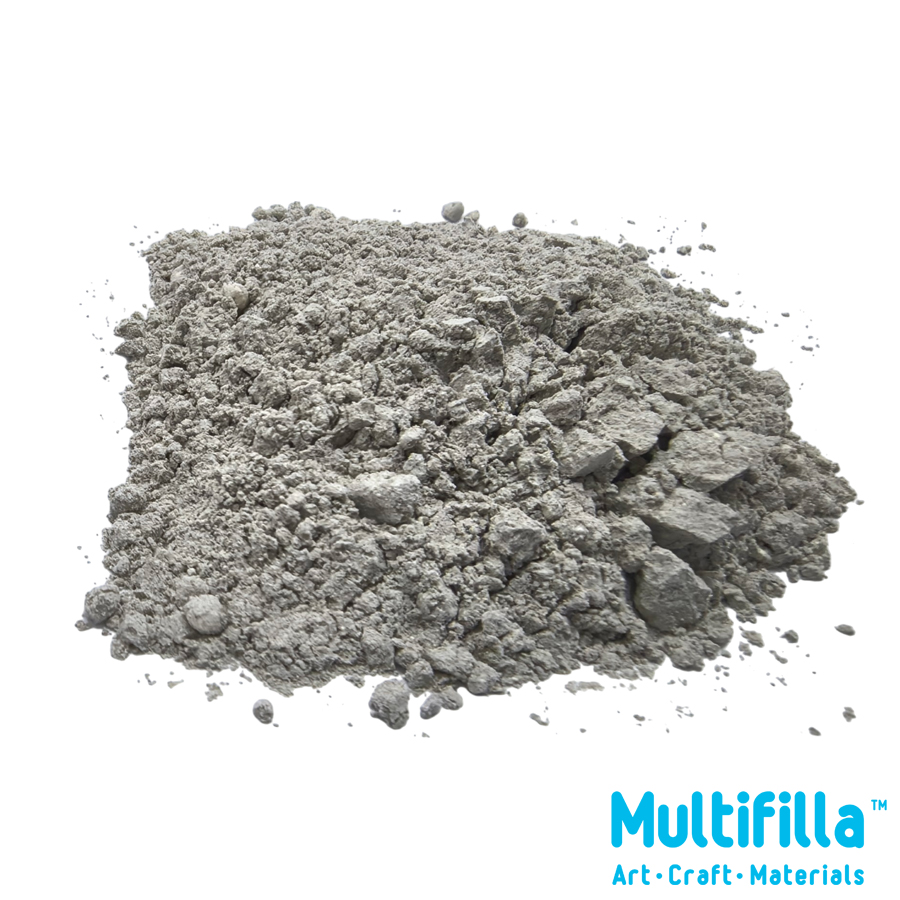
A nice buff fine clay powder to convert to slip in plaster mold casting. To deflocculate 10 kg powder, add 1 tablespoon sodium silicate and half tablespoon soda ash to 5 litres tap water. Stir water and sprinkle in powder to mix well. Allow overnight to mature clay. Fine tune slip viscosity if necessary by adding more powder or Rheotan L deflocculant without adding more water. Too much water in slip will over saturate mold with reduce number of cast per mold. Fill plaster mold full with slip. Top up till wall thickness is formed as water is being absorbed into the plaster mold. Pour out excess slip once desired wall thickness is achieved. Demold cast let dry till leatherhard dry before firing to cone 03 or 1060℃ . The brown clay fires to white earthernware bisque. Clay shrinkage is 10 – 12 %.
The chocolate brown clay is a plastic clay as the natural organic plant carbonaceous plant lignin contributes much to clay plasticity, strength and color. As a soluble organic color it will not affect plaster mold performance. In fact its rich chocolate color do assist in clay sculpting as it high light any surface unevenness. Lignin from organic plant carbonaceous matters adds plasticity to clay as a binder to clay particles. Adding 1ml of household bleach to 1 litre of slip slurry and sieving through mesh 100 sieve helps to reduce and oxidises lignin. Other than its dark lignin color it is an exception plastic clay for hand sculpting and white firing as its carbonaceous lignin is being fired off at cone 03.
To rescue lignin stained molds, mix white vinegar 1:1 warm water allow to soak mold surface and brush with soft nylon brush the mold profile. Do not soak the whole mold. Rinse with water and dry the mold in ventilated room temperature before resuming slip casting.


